Polycarbonate Sheet: Maximum UV Protection, Maintenance Tips & Buying Guide
So People often seem to be confused about which polycarbonate sheet to buy, and honestly, the answer is different for everyone. Choosing the correct sheet always depends on where you are going to use it, what type of weather it has to handle. Choosing the right product also decides how long the product is going to last without causing any issues. But there are two common factors that almost every buyer demands; better protection from UV rays and the sheet holding the same structure forever with very minimal effort. So, which one could be right for you? Let’s find out in this blog.
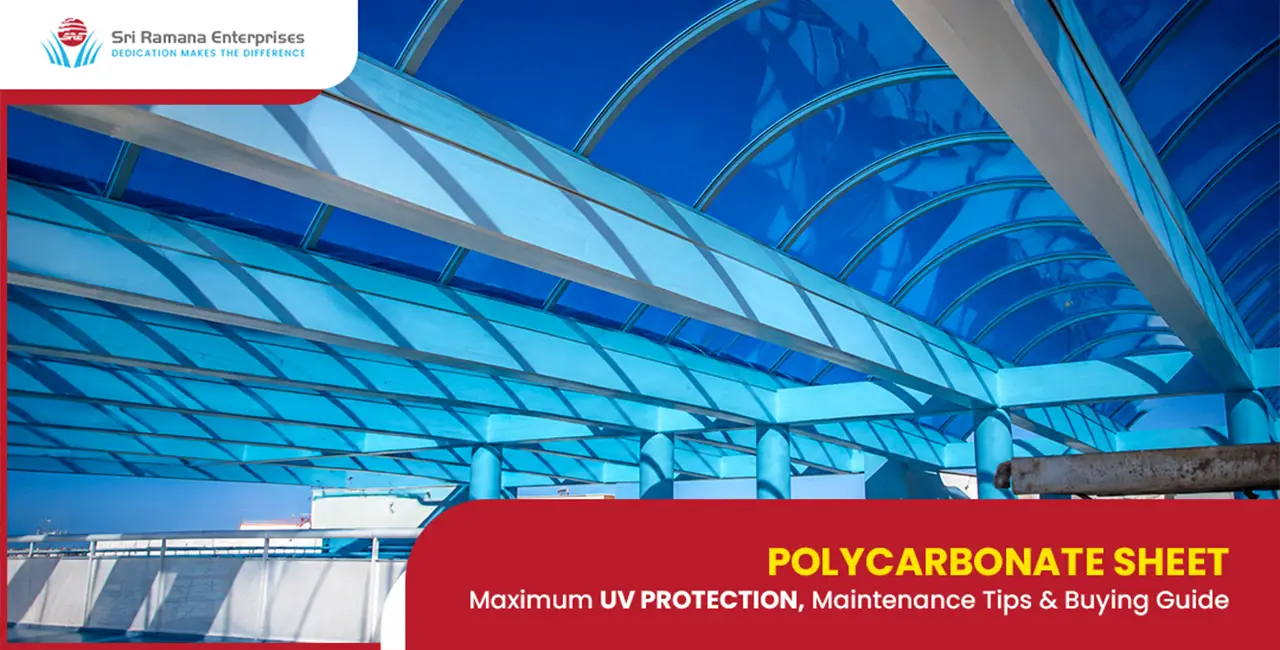
Which Polycarbonate Sheet Provides Maximum UV Protection?
Here is something worth knowing before you stick to any product. You may come across two products that look similar in the shop. No difference in colour, thickness, and probably the same price range. But keeping them for outdoor use for two to three years, and the difference will start to be reflected in the product. The right one for outdoor use remains clear; the other turns yellow, loses its shine, and slowly becomes brittle.
The cause behind the discolouration is nothing but the built-in UV protection in the polycarbonate sheet.
The better option is always a sheet where the UV layer is co-extruded, meaning it is fused into the outer surface during manufacturing itself. This is not a coating that someone sprays on afterwards. It does not peel in summer heat or wash off during cleaning. It stays as long as the sheet stays.
The multiwall polycarbonate sheets that come with additional UV protection are the most valuable choice for those who are looking for outdoor roofing. These sheets offer a hollow chamber pattern that slows down heat transfer, and UV coating on the outer side protects from the sun. Factory sheds, large canopies, and industrial spaces do well with this type.
Another polycarbonate sheet, a solid or compact polycarbonate sheet, works perfectly in situations where you need a perfect glass-like effect along with complete UV protection. From Skylights, canopies, walkways, to modern architectural panels are the most common applications of this sheet. A good compact polycarbonate sheet from an authorised dealer like Sri Ramana Enterprises remains transparent and holds the same structure even after years of direct sun exposure.
Before you finalise anything, check these:
- Whether the UV layer is co-extruded or just surface coated.
- If the manufacturer provides an anti-yellowing guarantee.
- What the warranty says about UV degradation specifically.
- Whether the light transmission rating is tested after prolonged exposure, not just at the time of manufacture.
At Sri Ramana Enterprises, these specifications are verified before recommending any sheet to a customer. The location, sunlight exposure, application type, and durability requirement all go into the final recommendation.
Types of Polycarbonate Sheets and What Are They Good For?
Multiwall Polycarbonate Sheet
Has multiple layers with air gaps between them. These gaps improve insulation and add to the sheet's overall strength. This sheet is the right pick and works well for roofing, skylights, and industrial spaces where heat control matters as much as durability.
Solid Polycarbonate Sheet
These sheets are dense and clear by nature, look much like glass, but are way stronger. People can choose this sheet for projects where visibility is the key requirement, along with safety, and impact resistance; everything in one material.
Embossed Polycarbonate Sheet
A polycarbonate sheet that scatters light instead of passing it straight through. This sheet is very useful for spaces where too much glare is caused by direct sunlight or where we demand privacy without blocking daylight.
Corrugated Polycarbonate Sheet
These sheets are lightweight and quick to work with on-site. It is worth choosing for practical roofing projects where rapid installation, complete flexibility, and outdoor durability play a vital role.
How to Maintain Polycarbonate Sheets for Longer Durability?
Polycarbonate sheets do not ask for much after installation. But what they do ask for should actually be done. Skipping basic maintenance is one of the main reasons sheets that should last fifteen years start looking worn out by year five.
Clean the Surface Regularly
Every two to three months is enough for most outdoor installations. Use a mild soap mixed with water and a soft cloth or sponge. Wipe in one direction only. Rinsing properly afterwards matters too because leftover soap residue can leave marks over time. In dusty areas or places with heavy bird activity, cleaning more often keeps the surface clearer.
Never Use Harsh Chemicals or Rough Materials
This one causes more damage than most people expect. Bleach, acetone, solvent-based cleaners, and rough scrubbing pads all attack the UV protective surface. Once that layer is damaged, yellowing and structural weakening follow much faster. Mild soap and water are genuinely all you need.
Inspect the Support Frame and Fittings
The sheet itself may look fine, while loose brackets or damaged supports underneath are already creating stress points. Every few months, check that all fixings are tight, the frame is holding correctly, and there is no water collecting around joints or at the edges.
Protect the UV Layer During Cutting or Drilling
If any on-site modification is needed, it must be handled carefully. The UV protection sits on the outer surface, and careless cutting or drilling can expose the raw material underneath. Seal cut edges with aluminium tape or an appropriate edge profile right after any modification.
Keep Water Channels and Gutters Clear
Blocked drainage means water sits on the surface longer than it should. Over time, this weakens both the sheet and the structure it is mounted on. Clearing gutters before the monsoon season and checking again after heavy rain takes very little time but makes a meaningful difference to how long everything holds up.
Why Choose Polycarbonate Over Traditional Roofing?
The shift is happening for practical reasons. Polycarbonate sheets are significantly stronger than glass, much lighter, and easier to install. They let natural light through without the heat buildup that solid roofing causes. UV and weather resistance are built in. Maintenance needs are genuinely low. And the service life, when the right sheet is chosen, and basic care is maintained, easily justifies the cost.
About Sri Ramana Enterprises
Sri Ramana Enterprises supplies polycarbonate sheets across Chennai, Bangalore, Coimbatore, Hyderabad, Vijayawada, and Vizag. The focus is not just on supply but on helping customers identify the right product for their specific project. Whether it is a residential skylight, a commercial structure, an industrial shed, or something custom, the recommendation is always based on real project requirements.
FAQs:
Q1. How long can a polycarbonate sheet last outdoors?
With good UV protection and basic maintenance, a quality sheet can last well over ten years. The actual lifespan depends on product grade, installation quality, and the conditions at the site.
Q2. Is polycarbonate a better choice than glass for roofing?
For most outdoor applications, yes. It handles impact better, weighs less, and is more forgiving during installation. Glass does not offer the same flexibility or durability under the kind of stress outdoor roofing faces regularly.
Q3. Do polycarbonate sheets hold up in heavy rain and extreme heat?
UV-protected polycarbonate sheets are specifically built for this. Heavy rain, temperature swings, and prolonged sun exposure are all conditions these sheets are designed to handle. Proper installation and occasional maintenance keep performance steady throughout all of it.